On a quiet morning in a small hamlet an hour outside of Hull, England, before the noise of training grounds and stadiums fill his day, Liam Millar is at home with his three young daughters. The house is loud, chaotic, full of movement and song, the kind of beautiful disorder that defines young families.
It is a world far removed from the controlled chaos of professional sport, and yet, in many ways, it is here that Millar’s most important transformation has taken place.
At 26, Millar is living the life he once imagined as a boy in Brampton, Ont. He plays professional soccer for Hull City in England’s Championship, a demanding league one level below the Premier League. But for much of the past year, his life, and his identity, was defined not by goals or assists, but by doubt.
“I think until I did my knee, that’s probably who I saw in the mirror,” Millar said. “Just a soccer player.”
That identity was built early. As a child, Millar spent hours in the basement with his father, Alan, working on drills, the ball always at his feet. Soccer wasn’t just something he played – it was who he was.
“He just used to follow me around,” Alan said. “I couldn’t leave the house. If I was going to coach, he’d be in the car.”
By age 12, Liam had moved to England with his father after impressing scouts from top clubs, eventually signing with Fulham and rising quickly through the ranks. He became the top scorer in the U16 Premier League, a prodigy on a clear path.
Four years later, in 2016, a then-16-year-old Millar moved to the academy program of Liverpool, one of the world’s biggest clubs, and continued growing, captaining the organization’s U23 team and debuting with Liverpool’s senior side in the FA Cup in 2020.
After stints in the Scottish Premiership and with Charlton Athletic, Millar moved in 2021 to Swiss side FC Basel, where he played in nearly 100 games and scored in both domestic and European competitions.
In August 2024, after another loan took him to Preston North End, Millar signed a three-year contract with Hull City, giving him stability and the chance to stop living out of a suitcase while still chasing the chance to play at soccer’s highest level.
But the pursuit of a dream rarely unfolds without interruption.
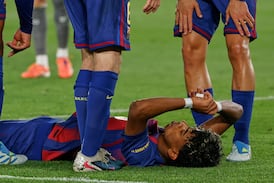
While playing for Hull City in an October 2024 match against Burnley, Millar cut between two defenders. It looked like a routine play, the kind of move he had executed thousands of times. This time, something went wrong.
“I tried to pivot, and my knee… I just heard a big crack,” he said.
At first, it didn’t seem catastrophic. He jogged, jumped, even returned briefly to the field. But his knee was unstable, “going everywhere,” as he describes it.
The diagnosis confirmed the worst: a torn ACL, damage to both menisci, and a Grade 2 MCL tear. Four ligaments, compromised in a single moment.
The winger, who had also carved out a place on the men’s national team with 39 caps after making his first appearance for Canada in 2018 against New Zealand, would be out at least a year.
Injuries are common for athletes. But for Millar, this was something deeper.
“When you’re known as one thing your whole life, to have that just taken away from you, you really go through an identity crisis,” Millar’s wife, Daniela, said.
Millar tried to meet the challenge with optimism. He attacked rehab with intensity, determined not just to return, but to come back better.
For months, progress came steadily. Then, in early 2025, it stopped.
“My pain wasn’t going away… nothing was getting better,” he said.
The physical plateau gave way to something insidious. He withdrew, even at home. The questions crept in.“What if I’m not the same? What if I don’t come back from this?”
One day, while driving in his car with Daniela, the weight of it all broke through.
“I remember being like, in that moment, I’m not okay,” he said. “I started bawling.”
It was a turning point, not because it solved anything immediately, but because he said it out loud to his wife.
“What can we do?” Daniela asked.
For Millar, admitting fear allowed him to move forward.
“I just felt like this weight off my shoulders,” he said.
From there, progress resumed. Slowly at first, then with momentum.
By September 2025, he faced a final hurdle: a strength test on his injured leg, one he had already failed three times. Passing it meant clearance to return. When he finally did, he and Daniela cried.
“It was like, finally,” she said.
Four weeks later, Millar stepped back onto the pitch. Then came an assist. Then, in his first start nearly a year after the injury, on Oct. 21, 2025, Millar scored the opening goal in Hull City’s 2-1 win over Leicester City.
As he walked away celebrating, emotions spilled over.
“I’m just crying,” he said, remembering the moment.
It was more than just a return. Somewhere in the long months of rehab, Millar’s sense of self had shifted. Soccer was no longer the entirety of who he was.
“My kids, my wife, my family, nobody cares if I play soccer or don’t play soccer,” he said. “They love me for me.”
It is a realization that sounds simple, perhaps even obvious, but for someone who had built his life around performance, it was profound.
Now, when Millar looks in the mirror, he no longer sees just a player. He sees a father, a husband, a person who endured something difficult and came through changed.
His father hopes he sees strength.
“I hope he sees how far he’s come and how proud we are of him,” Alan said. “I think the depression has made him a stronger person. It’s a terrible place to be, but if you find your way through it, I think he’s better for it.”
Millar’s wife sees growth, while he sees something else entirely.
“I’m not just a soccer player,” he said. “I’m Liam Millar. I’m me.”